To map a medication, first look within the Unmapped: Potentially Controlled column to verify if it is a controlled substance. This is where ControlCheck lists unmapped medications that the application has identified as possibly controlled, based on the medication name. You will be mapping medications to each other or to a generic drug that exists in the system.
There are two available medication types:
- Unmapped: Potentially Controlled
- Unmapped: Other

You can sort each column by clicking on the arrow that displays by each header. You can sort by one column at a time. Each medication section has the same headers:
- Medication Name - Displays the medication name as populated in the source file.
- Potentially Controlled - A checkbox will indicate if the medication is potentially controlled.
- Source File Type - Displays the location from where the data was originally sourced.
- Source System Medication Identifiers - Displays the med ID of the medication as populated in the source file.
- Pending Patients - Displays a count of patient records that are being blocked from processing by the unmapped medication.
- ControlCheck ID - Displays the identifier associated with the medication in ControlCheck.
We recommend you prioritize mapping medications that have pending patients. All events for that patient are blocked from processing until ControlCheck is sure of the medication attributes for those events, which is dependent on mapping the unmapped medication. Click the Pending Patients value to open a new page and see each patient being blocked, along with the patients' MRN and/or FIN.
When you map medications, it's important that you choose the correct package size. Not only is this just a general, good practice, but incorrectly mapping package sizes can negatively impact different care areas (Pharmacy, Nursing, OR).
- Pharmacy Module - Incorrecly mapping the package size could cause variances in the Audit Table.
Map Unmapped: Potentially Controlled Medications
The unmapped medication names contain a value in parenthesis at the end of the name that says either SPLIT or UNMAPPED.
Split medications are ones that were previously mapped but require updating or correction.
Unmapped meds are new meds that ControlCheck has not seen before and require mapping.
Once you are ready to map a medication:
- Click Select on the medication you want to map. You will see your chosen medication in the Selected Unmapped Medication section as well as suggestions for mapping options in the Medications in your ControlCheck Formulary section.
Medications in your ControlCheck Formulary Columns
- Name - Existing name for that drug in the ControlCheck formulary.
- Package Size - Existing package size for that drug in the ControlCheck formulary.
- Concentration - Existing concentration (or strength) for that drug in the ControlCheck formulary.
- Form Factor - Displays one of the following: Oral, Liquid, Patch, and Inj (injectable).
- PF - Indicate Yes or No to determine if the drug is Preservative Free.
- Audit State - The modules that are set up to audit that medication.
- Use keywords in the Selected Unmapped Medication name such as Patch in the example image below to help narrow the list of possible matches. Looking at the Suggested Medications, we can see that there is a match with the same Form Factor and Concentration.
- Click the matching drug in the Suggested Medications list.
- Click Map.
The value in the Identifiers column in the Medication Mapper is the Med ID or NDC from your source files. If you are unsure what the medication is, we recommend plugging that identifier into your source systems to confirm what the correct mapping should be.
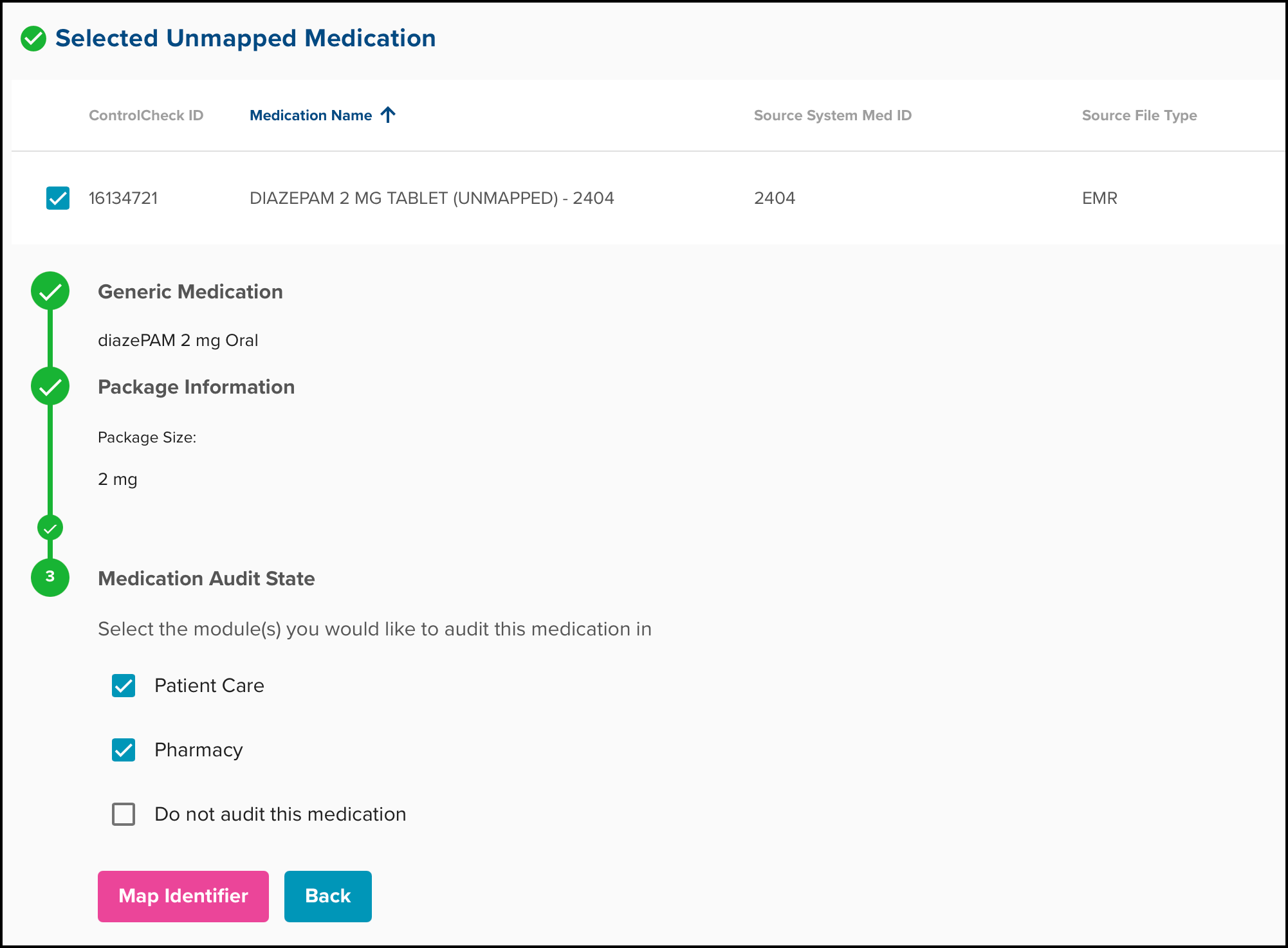
You did it! Your total mapping count should now be reduced by one. However, mapping isn't always the perfect scenario. You can refer to one of our many knowledge base articles to get details on what to do if you can't find the drug you're looking for in the Suggested Medications list.
Map Unmapped: Other Medications
The unmapped medications that are not potentially controlled will not display a checkmark within the "Potentially Controlled' column. For example, ControlCheck will not be able to catch brand-name controlled substances, so they will likely appear without a checkmark for mapping. Additionally, there might be medications in this section you do not want to audit in ControlCheck. You can ignore these meds using the Ignore Checked option.
If there are medications listed as Unmapped: Other that are controlled or you want to audit, you can still map the medication for auditing by following the steps listed above, starting by clicking Select in the medication row.
Was this article helpful?
That’s Great!
Thank you for your feedback
Sorry! We couldn't be helpful
Thank you for your feedback
Feedback sent
We appreciate your effort and will try to fix the article